PV module procurement

Mono Solar Panel Supplier

How importers and installers source mono solar panels by wattage class, container loading, certification, and warranty before a bulk quote.

Mono Solar Panel Supplier

Buying mono solar panels for export is not the same as buying one panel for a roof. The wattage on the datasheet is where most buyers start, but it is rarely what decides the order. What decides the order is how many modules fit in a container, which certifications your destination market accepts, how the warranty is documented, and whether the panels pair cleanly with the inverters and batteries you already sell. This guide walks an importer or installer through those decisions in the order they actually matter.

Spire ESS supplies high-power MBB half-cell mono modules in two families: the NES132 line at 480-505W and the larger NES144-7 line at 545-555W. Both run at 1500V system voltage, carry a 12-year product and 25-year linear power warranty reference, and ship with ISO 9001 / 14001 / 45001, TUV, CE, CQC, SGS, INMETRO, and DEKRA documentation available on request. The sections below explain how to turn those numbers into a clean request for quotation.

What to decide before asking for price.

Mono Solar Panel Supplier

  • Wattage is the entry point, but container loading, project dimensions, and destination certification decide the real fit.
  • Separate rooftop, commercial, off-grid, and installer-bundle requests early so the quote matches the use case.
  • Send wattage class, target quantity, destination country, and required certificates so sales can confirm packing and shipment route in one pass.

Two mono families, one sourcing decision

The NES132 family (480-505W) uses 132 half-cells and is a compact, well-balanced module for residential rooftops and tighter commercial layouts where panel dimensions and roof anchoring matter more than peak wattage per module. The NES144-7 family (545-555W) uses 144 half-cells in a larger 2279 x 1134 x 35 mm format at 28.6 kg, and delivers 21.09% to 21.48% module efficiency. It is the better fit for ground mount, large commercial roofs, and installer bundles where fewer, higher-power modules cut down on rails, clamps, and labor.

If you resell to installers, stocking one module from each family covers most enquiries without holding ten SKUs. If you supply a single project type, pick the family that matches the mounting reality on site, then standardize on one or two wattages within it to keep logistics and spares simple.

Read the spec sheet like a buyer, not an installer

Four numbers on the datasheet drive procurement decisions. Rated power and efficiency tell you how much array you can build per container. Voc and Isc (49.75-50.02V and 13.93-14.07A on the 545-555W line) tell your installers how many modules go in a string before the inverter MPPT window is exceeded, which is why destination grid standard belongs in the RFQ. Module dimensions and weight drive pallet count, container fill, and whether a site needs mechanical handling. Warranty terms decide what documents the end customer will demand at handover.

  • Power and efficiency: how much kW per container, and per pallet.
  • Voc / Isc: string length and inverter matching for the destination grid.
  • Dimensions and weight: pallet quantity, container fill, and site handling.
  • Warranty reference: 12-year product and 25-year linear power, documented per shipment.

Plan the container before you plan the wattage

The unit that controls your landed cost is the pallet, not the panel. For 540-555W class modules, a single pallet and a full 40HQ container carry a fairly predictable number of modules, so your real question is how many containers your project or season needs and whether mixed wattages can share a container. The table below gives typical planning figures; exact counts depend on pallet height, packaging, and weight limits, so confirm the final packing list with sales before you book freight.

A practical rule for importers: quote your customer in whole pallets or whole containers, not in single panels. It keeps your margin clean, avoids loose-quantity breakage claims, and makes the RFQ to Spire ESS unambiguous.

Certifications decide which markets you can actually sell into

A panel you cannot certify for the destination is a panel you cannot sell there. Spire ESS mono modules carry TUV and CE for European markets, INMETRO for Brazil, plus CQC, SGS, and DEKRA, backed by ISO 9001, 14001, and 45001 manufacturing certificates. The certificate set you need depends entirely on the destination country and the incentive or grid-connection scheme the end customer is applying for. State the destination market in your enquiry and sales will confirm which documents ship with the order and which are available on request.

MOQ, lead time, and what a clean RFQ contains

Mono panels are quoted by project rather than by a fixed unit MOQ, because freight economics push almost every serious order toward container quantities. The fastest way to a firm price and lead time is a complete request: wattage class or module family, target quantity in pallets or containers, destination country and port, required certifications, and any rooftop, ground-mount, or installer-bundle context. With those five inputs, sales can confirm packing, certificate scope, and shipment route without a back-and-forth.

Sell a system, not a part

Buyers who only quote panels compete on price alone. Buyers who quote panels with a matched hybrid inverter and battery sell a system and defend their margin. Spire ESS hybrid inverters and residential or commercial storage are designed to pair with these modules, so an installer-bundle RFQ can come back as one coordinated quote covering PV string plan, inverter phase, and battery voltage. If you sell to installers, ask for the bundle, not just the module.

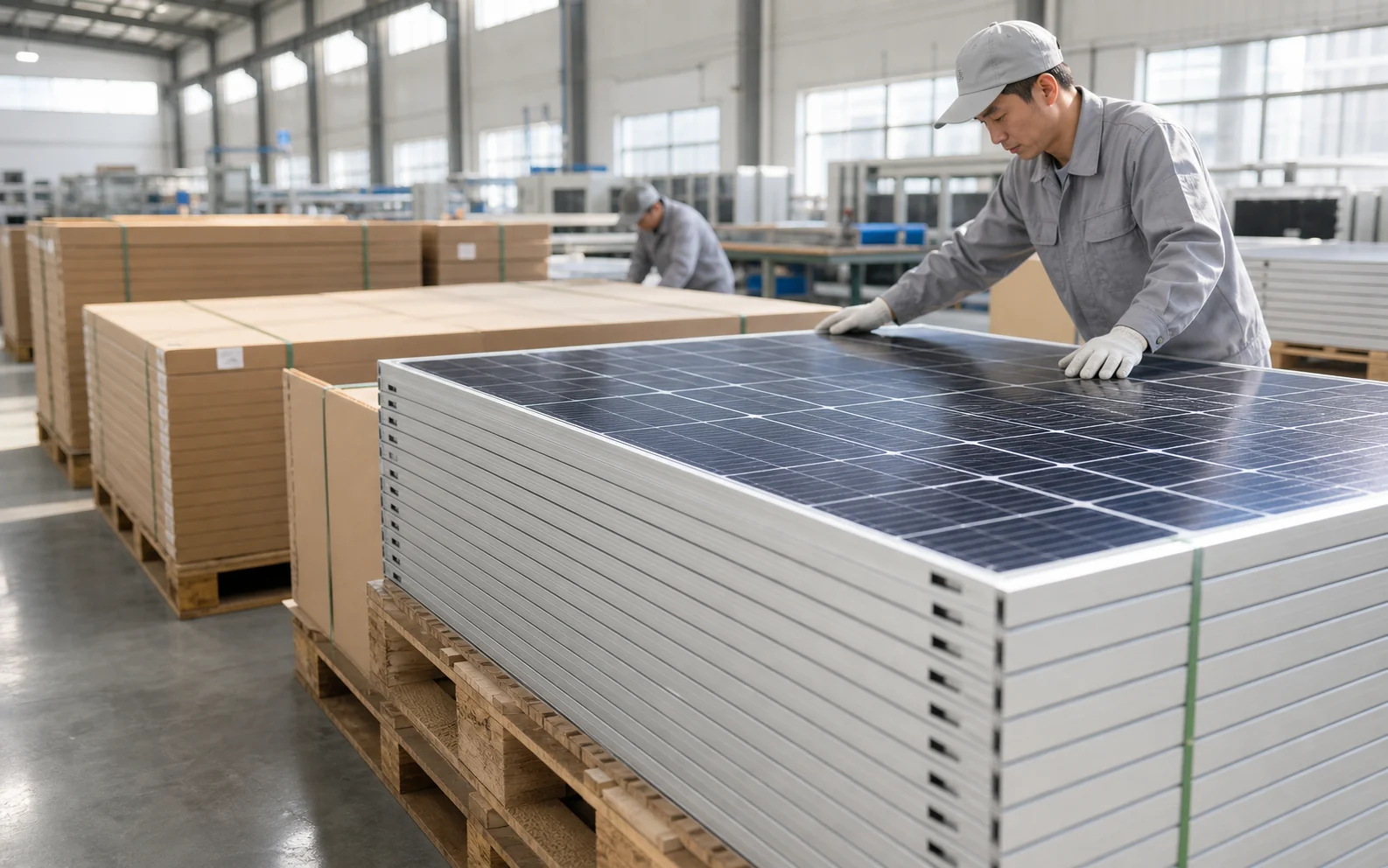
Typical export packing for 540-555W mono modules

Shipping unitTypical modulesPlanning note
1 pallet~31 pcsBase ordering unit; confirm pallet height and weight per packing list.
20' GP container~300-340 pcsUseful for trial orders or mixed-product shipments.
40' GP container~600-620 pcsCommon for single-wattage installer stock.
40' HQ container~620-680 pcsMost cost-efficient per watt for project volume.

Figures are typical planning ranges, not a commitment. Exact quantities depend on packaging, pallet configuration, and weight limits; confirm the final packing list with sales before booking freight.

Products

Products to shortlist

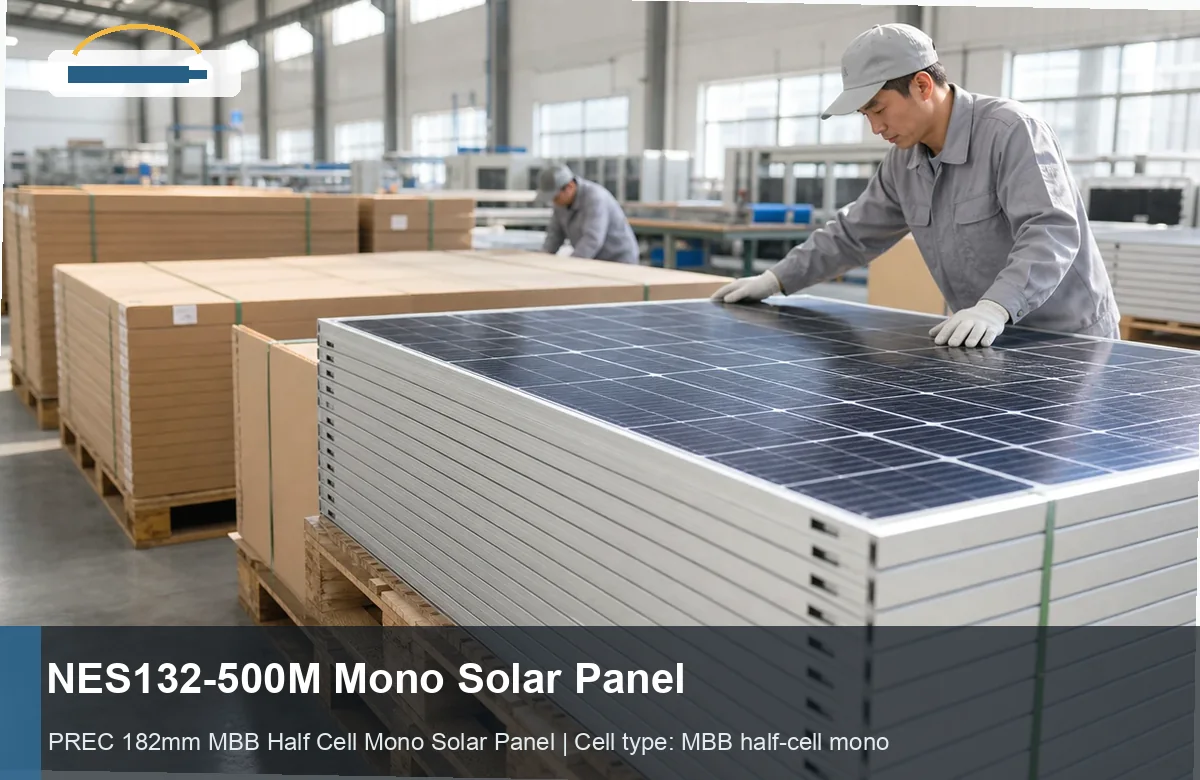
NES132-500M Mono Solar Panel

Mono Solar Panels / PREC 182mm MBB Half Cell Mono Solar Panel

NES132-500M Mono Solar Panel

High-power MBB half-cell mono solar module for rooftop, commercial, and off-grid solar projects.

Cell typeMBB half-cell monoSystem voltage1500VProduct warranty12 years reference
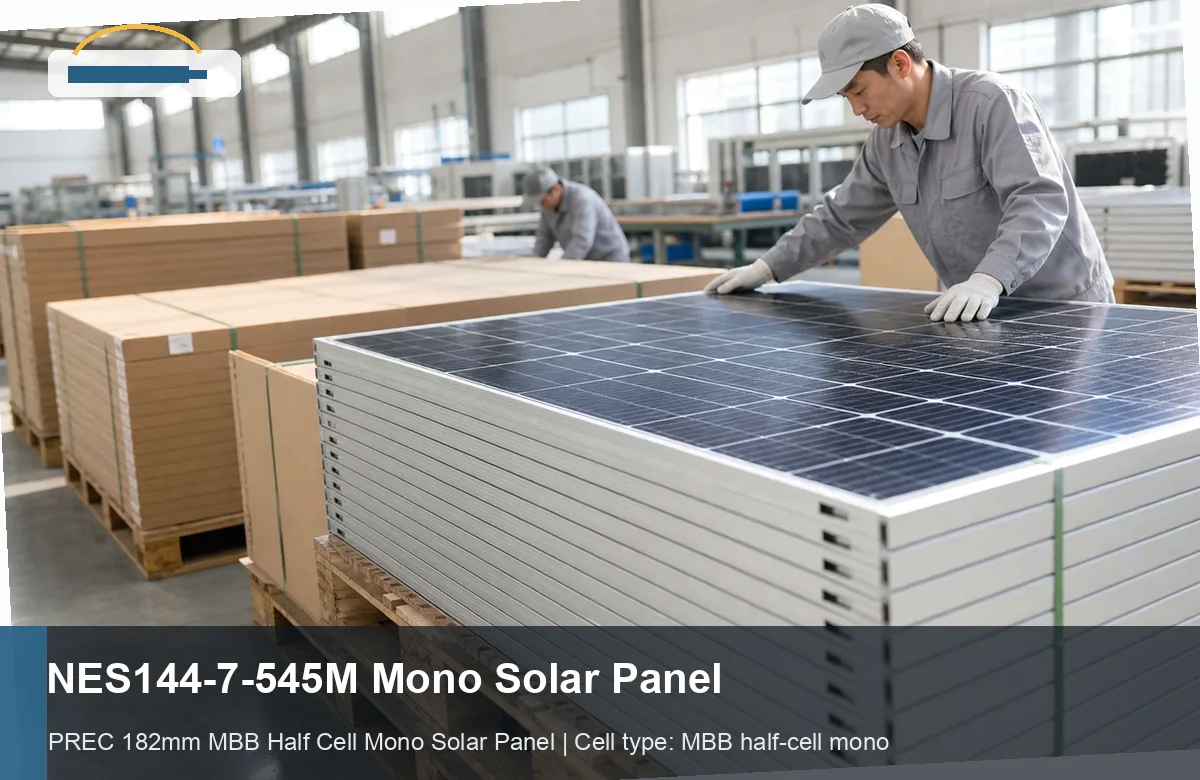
NES144-7-545M Mono Solar Panel

Mono Solar Panels / PREC 182mm MBB Half Cell Mono Solar Panel

NES144-7-545M Mono Solar Panel

High-power MBB half-cell mono solar module for rooftop, commercial, and off-grid solar projects.

Cell typeMBB half-cell monoSystem voltage1500VProduct warranty12 years reference
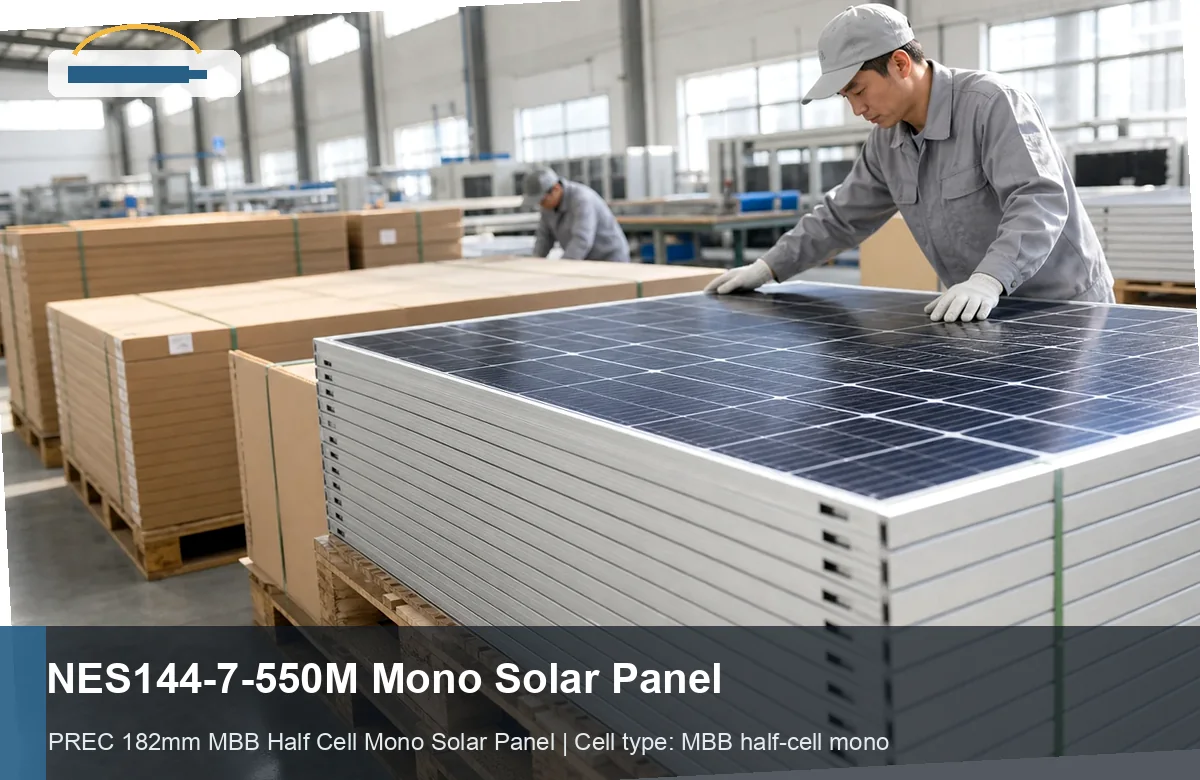
NES144-7-550M Mono Solar Panel

Mono Solar Panels / PREC 182mm MBB Half Cell Mono Solar Panel

NES144-7-550M Mono Solar Panel

High-power MBB half-cell mono solar module for rooftop, commercial, and off-grid solar projects.

Cell typeMBB half-cell monoSystem voltage1500VProduct warranty12 years reference
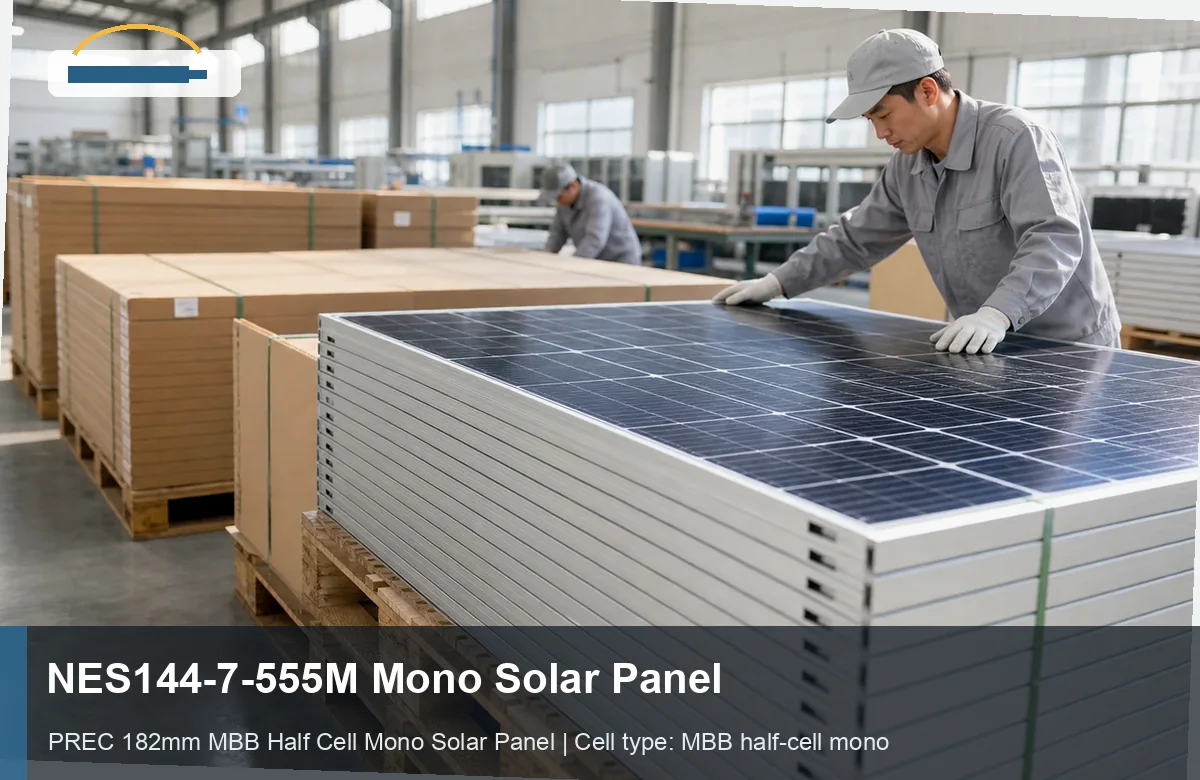
NES144-7-555M Mono Solar Panel

Mono Solar Panels / PREC 182mm MBB Half Cell Mono Solar Panel

NES144-7-555M Mono Solar Panel

High-power MBB half-cell mono solar module for rooftop, commercial, and off-grid solar projects.

Cell typeMBB half-cell monoSystem voltage1500VProduct warranty12 years reference

Sourcing FAQ

What is the minimum order quantity for mono solar panels?

Mono modules are quoted by project rather than a fixed unit MOQ, because freight economics push most orders to container quantities. Tell sales your target quantity in pallets or containers and destination port for a firm quote.

Which certifications do your mono solar panels carry?

TUV, CE, CQC, SGS, INMETRO, and DEKRA, backed by ISO 9001, 14001, and 45001 manufacturing certificates. The exact document set shipped depends on your destination market and is confirmed per order.

How many 550W panels fit in a 40HQ container?

Typically around 620-680 modules for the 545-555W class, but the exact count depends on packaging, pallet configuration, and weight limits. Confirm the final packing list with sales before booking freight.

Can I mix different wattages in one order?

Yes, within practical packing limits. Many importers stock one module from the NES132 family and one from the NES144-7 family. Share your assortment plan and sales will confirm how to pack it.

What is the difference between the NES132 and NES144-7 panels?

NES132 modules use 132 half-cells at 480-505W in a more compact format for rooftops and tighter layouts. NES144-7 modules use 144 half-cells at 545-555W in a larger, higher-efficiency format better suited to ground mount, large roofs, and installer bundles.

Do you support OEM or private-label panels?

Private-label scope on PV modules is confirmed case by case. Send your branding and documentation requirements with the enquiry and sales will confirm what is possible for your volume.

AI product assistant

Describe the buyer need. Get a grounded shortlist.

3-4 products
Tell me the use case, destination market, target quantity, or certification requirement. I will map it to Spire ESS products before routing a quote.