The runtime formula in plain terms
Runtime comes down to one division: how many usable watt-hours the station carries, divided by how many watts the appliance draws. A 500Wh station running a 100W load would theoretically last five hours. That is the nameplate calculation, and it is a useful starting point.
The real calculation adds inverter efficiency. A portable power station converts stored DC into AC through a built-in inverter, and that conversion is not free; a typical inverter runs at around 85% efficiency, so roughly 15% is lost as heat. The working formula is usable Wh divided by load watts, multiplied by the efficiency factor. For a 500Wh station at 85% running a 100W load, the practical estimate is closer to 4.25 hours, not five.
- Step 1: measure or look up the appliance draw in watts.
- Step 2: find the usable capacity of the station in watt-hours.
- Step 3: multiply usable Wh by the efficiency factor (use 0.85 as a safe estimate).
- Step 4: divide by the load in watts to get approximate runtime in hours.
- Step 5: present a range to the customer, not a single precise number, because conditions vary.
Why real runtime is less than the nameplate
Capacity ratings are measured under controlled lab conditions: a slow, steady discharge at a moderate temperature with a known load. The real world adds variables that each shave time off the nameplate.
Temperature is the most predictable. Cold weather reduces the energy a lithium cell delivers in one discharge; a station at -10C may deliver noticeably less usable energy than the same station at 25C even with identical stored charge, and high ambient temperatures can trigger thermal management that also limits output. Buyers in cold-climate channels (ski resorts, northern camping, emergency prep) should recommend a larger tier than the simple arithmetic suggests.
Load type matters too. Resistive loads like bulbs and heaters draw a flat wattage; motor-driven loads like fridges, fans, and tools draw a higher surge at startup and then settle. A station's peak surge output decides whether it can start the motor at all; the running draw decides runtime once it is spinning. Both numbers belong in a retail comparison.
- Cold temperatures reduce usable capacity; add headroom for cold-climate or winter outdoor channels.
- Motor loads create startup surges that can exceed rated AC output; check surge rating against the appliance.
- Mixed loads running together add their draws; calculate total watts, not per-appliance.
- Battery aging gradually reduces usable capacity over hundreds of cycles; LiFePO4 retains capacity longer than standard lithium.
Choosing a capacity tier for your channel
Outdoor retail channels typically sell two or three tiers rather than one model, because the buyer pool is wide. A hiker charging a phone and a headlamp has different needs from a van-lifer running a 12V fridge and a laptop together. Building an assortment around an entry tier, a mid-range tier, and a flagship tier serves both ends and creates natural upsell paths.
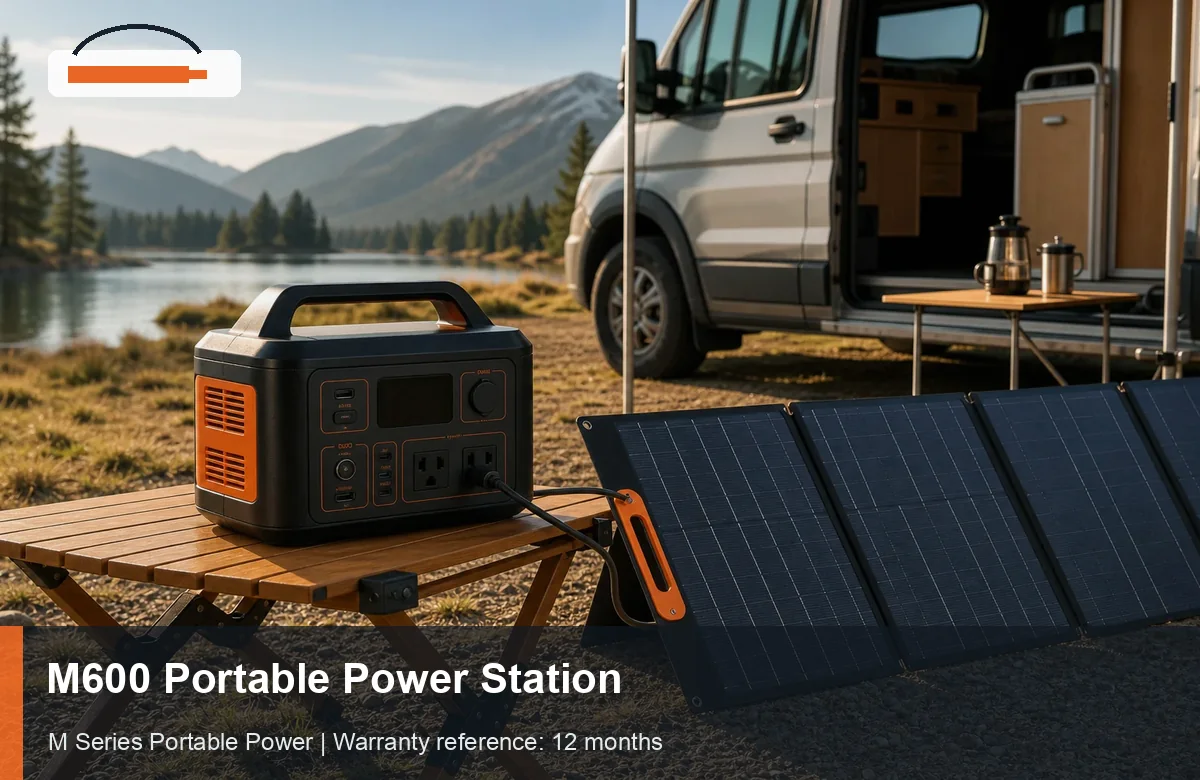
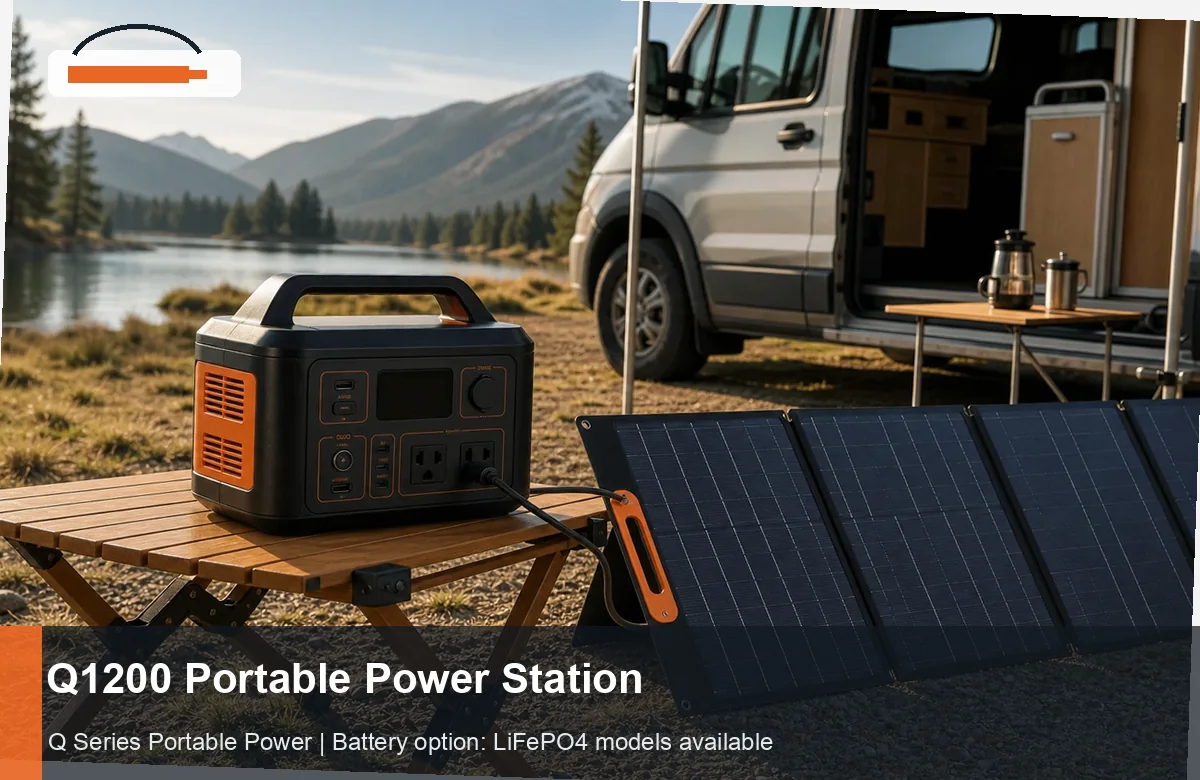
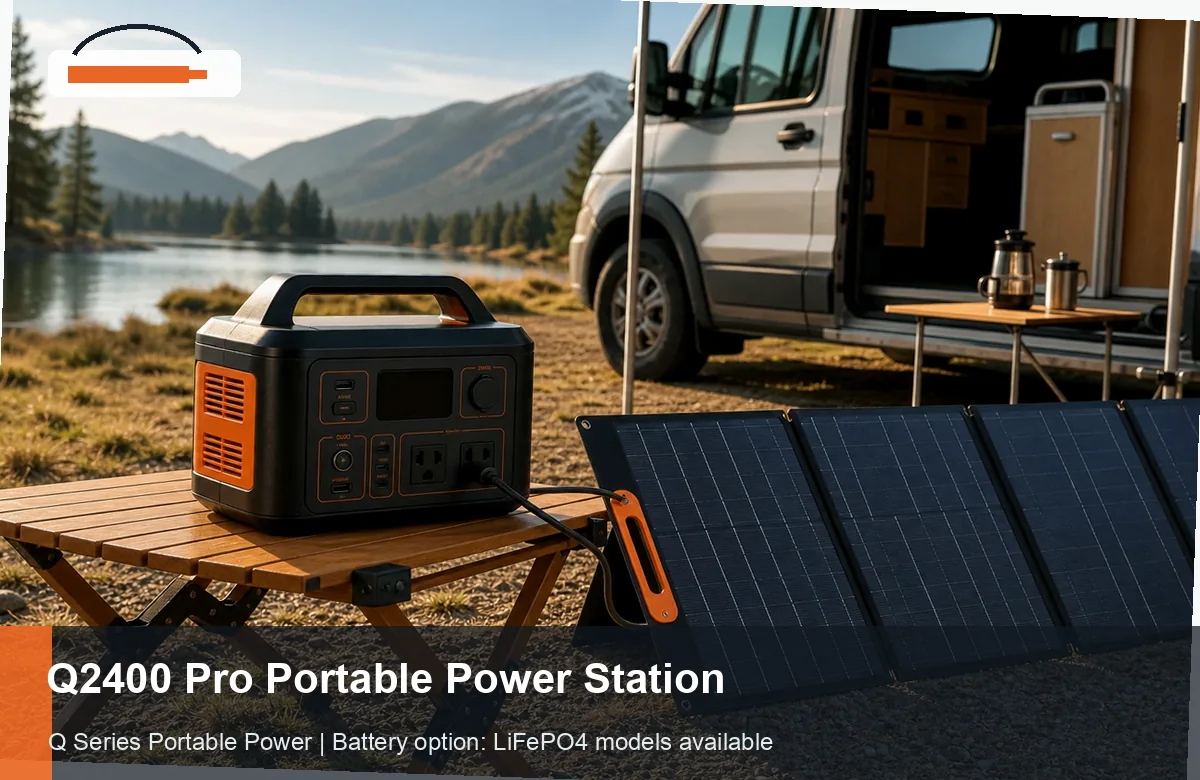
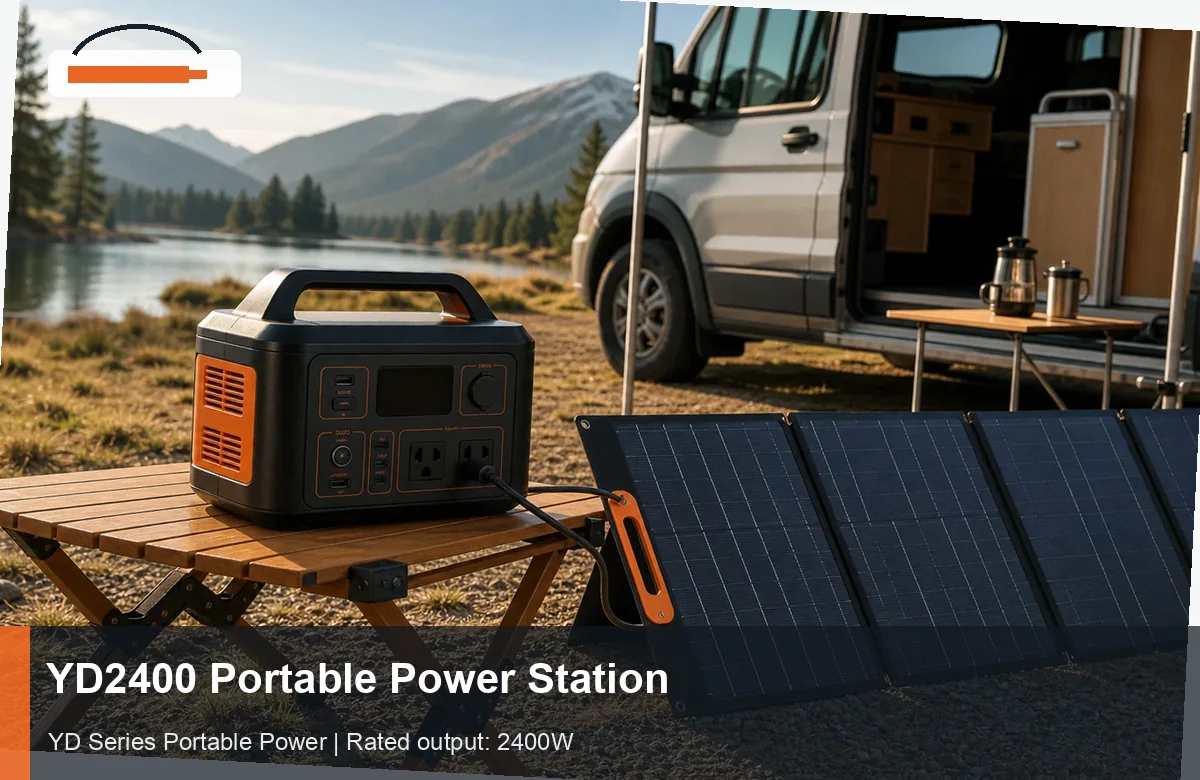
A practical approach is to match the station's rated AC output to the highest-draw appliance the customer is likely to run, then match capacity to the duration they need. A 300W-rated station in the M300 class (around 266 to 300Wh) is a solid entry SKU for phones, lighting, and small electronics. A 600W M600 (around 500 to 555Wh) handles a small projector, a CPAP, or a full day of laptop use. The Q1200 at 1008Wh steps up to small refrigerators and overnight camping; the Q2400 Pro at 4608Wh and the LiFePO4 YD2400 at 2016Wh suit multi-day trips, car camping, or serious emergency backup. Confirm exact specs with sales for each tier.
- Entry tier (under 300Wh): phones, tablets, cameras, LED lighting, small fans.
- Mid tier (400 to 700Wh): laptop, projector, CPAP, drone charging, small cooler.
- Upper mid tier (around 1kWh, Q1200): portable refrigerator, tools, overnight cabin backup.
- High capacity (2kWh and above, YD2400 / Q2400 Pro): extended off-grid, van life, home emergency.
- Match rated AC output first, then capacity; a unit that cannot start the motor is wrong regardless of Wh.
Matching appliances to tiers
A camping fridge typically draws 40 to 60W steady with a startup surge of 150 to 200W. A 600W-rated station handles the surge comfortably; at 50W running draw and 500Wh usable at 85% efficiency, the working estimate is roughly 8.5 hours of continuous cooling, practical for an overnight camp. A two-day trip pushes you toward the Q1200 or larger.
A CPAP without a heated humidifier draws roughly 30 to 60W depending on pressure. A 266Wh M300-class station at 85% gives approximately 3.75 to 7.5 hours, workable for one night; a heated humidifier can push draw to 100 to 150W, cutting that estimate by half, so buyers needing humidifier support or multiple nights should step to the M600 or M700 class. All of these are planning estimates; confirm device-specific figures with the appliance maker and recommend a home test before relying on the unit in the field.
- Camping fridge (50W steady): about 7 to 9 hours on a 500Wh station at 85% efficiency.
- Laptop (60W): about 7 hours on a 500Wh station; longer at lower brightness.
- CPAP no humidifier (40W): about 5.5 hours on a 266Wh station; step up for a heated humidifier.
- LED work light (20W): well over 10 hours on any mid-range station.
- Power drill (500W peak): check surge rating; size to output, not duration.
Pairing with foldable solar for recharge
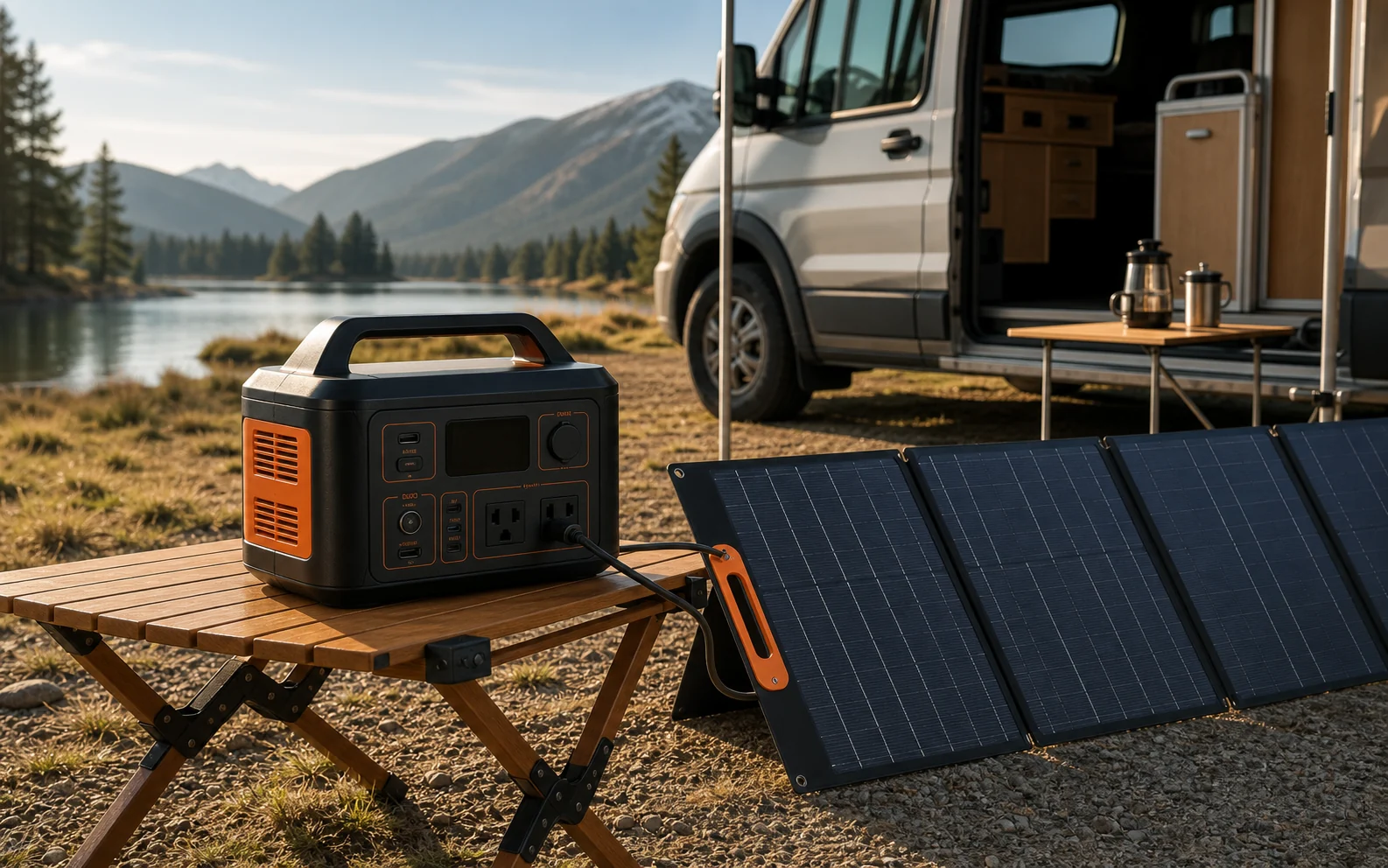
A station that recharges from a foldable panel roughly doubles its useful range: instead of depending on a wall outlet between trips, the customer tops up during the day while powering devices in the evening. This pairing is also a strong retail story, turning a one-time-use backup device into a renewable off-grid system.
Solar recharge time depends on panel wattage and sunlight, which vary by season, latitude, cloud cover, and angle. A rough planning rule is four to five peak sun hours per day in good weather. A 100W foldable panel at 100W for four peak hours adds roughly 340 to 400Wh per day after charge-path losses, enough to meaningfully extend a mid-range station on a multi-day trip but not necessarily to fully recharge a large station in one day. Buyers who want full same-day recharge for larger stations should consider a higher-wattage panel and confirm the solar input specs with sales.
The Spire ESS foldable panel range runs from 60W to 400W in the XC series, plus SC100W and SC150W portable chargers. Confirm connector compatibility between the panel and station before bundling; ask sales which panels pair directly with which models and what adapter cables ship in the package.
- Four peak sun hours per day is a practical planning baseline in fair weather.
- A 100W panel adds roughly 340 to 400Wh per day after typical charge-path losses.
- Larger panels reduce recharge time but add weight and pack size; match panel class to portability needs.
- Confirm connector compatibility between panel and station before offering a bundle.
Plug, certification, and packaging to confirm
Capacity and runtime estimates get the buyer interested; plug standard, certification, and retail packaging close the order. A unit with the right Wh but the wrong plug cannot be sold into the target market, and a product without the required certification will fail import or retailer onboarding. Getting these into the RFQ from the start saves weeks of back-and-forth.
The Spire ESS portable range carries certification references including UL, FCC, CE, PSE, SAA, UN38.3, RoHS, and UKCA depending on the model and series. The exact set for your destination and model is confirmed by sales, not assumed from the catalog. State the destination country, the retail channel type (mass market, outdoor specialty, e-commerce, emergency preparedness), and any private-label packaging requirements in your first inquiry so the response addresses them in one pass.
- Plug standard: confirm AC plug and DC port types match the destination market before sampling.
- Certifications: state destination country and channel type; sales confirms the exact document set.
- Retail carton: confirm print language, barcode standard, and shelf-ready packaging requirement early.
- OEM scope: logo, manual language, and artwork changes specified at inquiry stage.
- LiFePO4 vs standard lithium: if chemistry is a retail differentiator, specify it in the RFQ.