EV Chargers / EU EV Charging Series
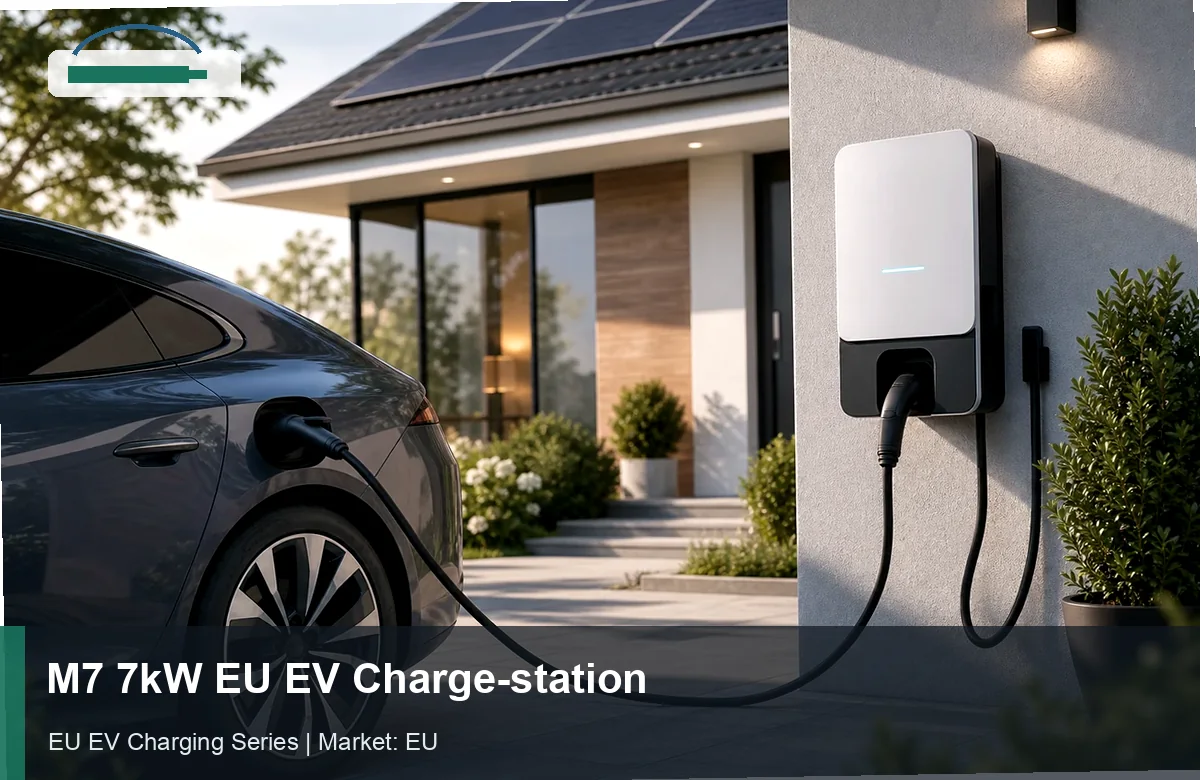
M7 7kW EU EV Charge-station
Wall-mounted and portable EV chargers for EU residential and light commercial channels.
MarketEUTypeWall-mounted or portable depending modelPower7kW
 Spire ESSHangzhou Xiangcai Network Technology Co., Ltd.
EV charger power ladder
A distributor-friendly comparison of the main AC wallbox power bands before building an EV charger quote list.
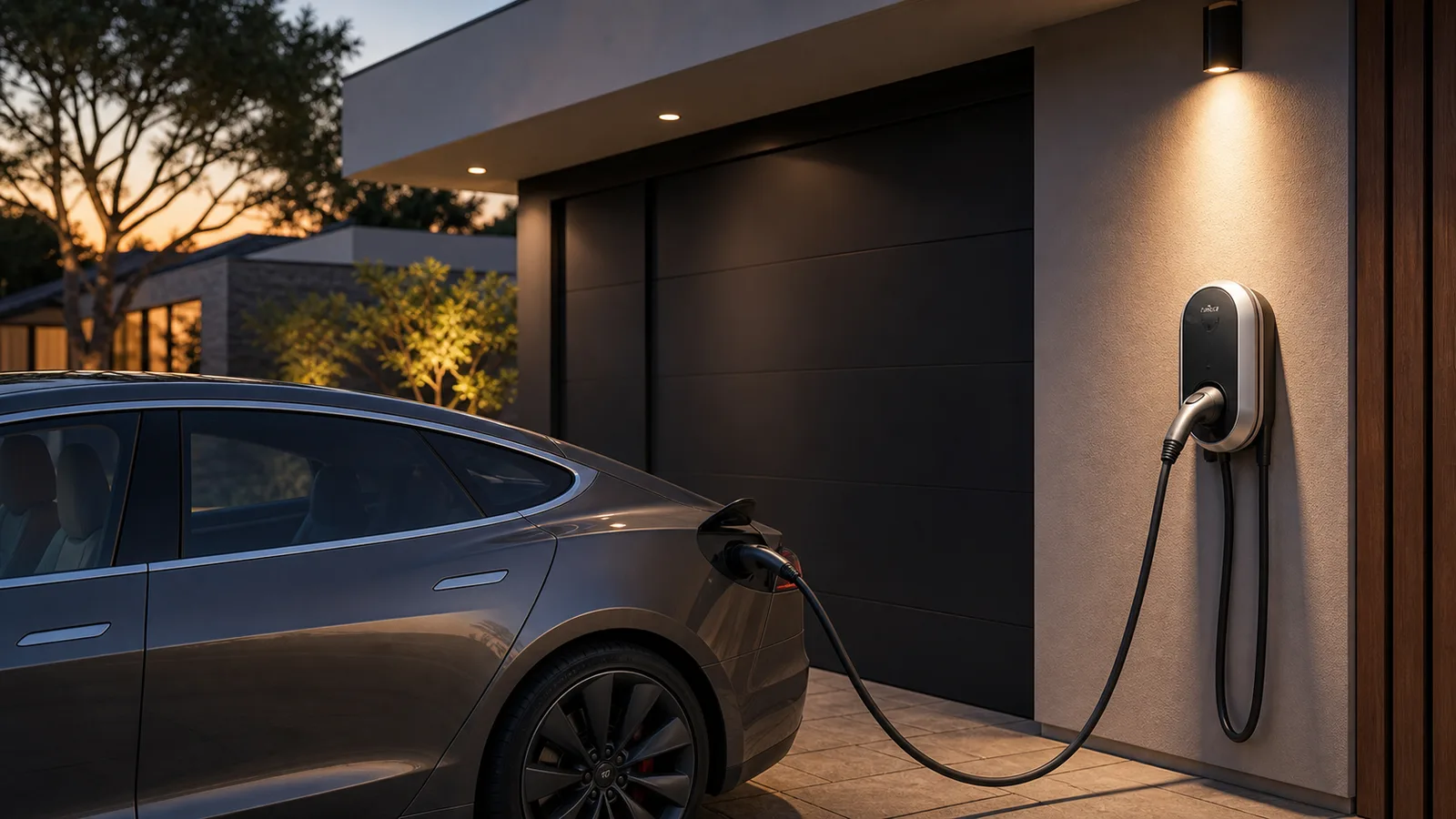
When a distributor or installer starts building an EV charger product line, the first question is almost always about power: 7kW, 11kW, or 22kW? The number on the spec sheet describes the maximum rate at which the charger pushes energy into the vehicle battery, but choosing the right power band for your channel is a business decision, not an electrical one. It depends on the grid supply your customers actually have, the installation environment you target, the retail story you want to tell, and how the charger line fits alongside any solar or storage you already sell.
Spire ESS supplies CE-certified EU-market AC wallboxes across all three power bands under the M and I model families at 7kW, 11kW, and 22kW, plus 16A portable chargers in the Q16 and W16 formats. None of these models require you to lock a connector type, cable length, app platform, or smart feature without talking to sales first, because those details vary by market and volume. This guide helps you understand what each power band means in practice so the sales conversation moves straight to commercial specifics.
What to decide before asking for price.
AC wallbox chargers are rated by the maximum power they deliver from the grid to the vehicle. A 7kW charger draws roughly 32A from a single-phase supply and adds in the region of 30 to 40 km of range per hour for a typical mid-size EV, which is enough for most drivers who plug in overnight. An 11kW charger uses all three phases of a three-phase supply, tripling the power and cutting time to a full charge to roughly a third of the single-phase equivalent. A 22kW charger draws higher current from the same three-phase supply, useful when parking time is short or several vehicles share a site.
The key point for a distributor is that power band does not map cleanly to price tier from the buyer's side. A homeowner with a single-phase connection cannot benefit from an 11kW or 22kW wallbox regardless of budget, because the grid supply is the constraint. A commercial customer with three-phase power may want 22kW so a single unit serves a wider range of vehicles and session lengths. Matching the power band to the real installation drives satisfaction and repeat orders.
The single-phase vs three-phase question is the most common confusion for first-time EV charger buyers and the most important to resolve before a quote. In most EU markets, standard residential connections are single-phase, which makes 7kW the natural ceiling for a home wallbox without a grid upgrade. Some countries have more three-phase residential connections than others, so the right default depends on the market. Confirm with local electrician contacts or grid operator guidance before assuming.
Light commercial sites such as parking, retail lots, and small offices typically have three-phase supply, which opens up 11kW and 22kW. Three-phase also matters for solar integration: a solar-plus-storage system on three-phase can share load balancing across phases, a genuine selling point when bundling chargers with storage. The practical implication is that home-only channels may need only 7kW, while channels reaching commercial or three-phase residential sites need 11kW at minimum and 22kW at the top.
Home charging retail is the largest-volume segment for wallbox distributors in most EU markets. The buyer is a homeowner or a residential installer acting for one. Here 7kW covers the majority of cases, the story is simple, and the objection is rarely speed but reliability, aesthetics, and ease of install. If your channel is primarily residential, a 7kW line is the right start, with 11kW as an upgrade for customers who confirm three-phase supply.
Installer and integrator channels are more varied. An electrician servicing homes and small commercial sites wants 7kW, 11kW, and 22kW so they can quote any job without a second supplier. Assortment breadth is the value: one catalog relationship covering the full ladder. The same applies to a solar installer adding EV charging to their offer.
Commercial and distributor channels (parking operators, fleets, commercial real estate, large-format retail) often treat 22kW as the baseline because their sites have three-phase supply and faster charging is expected. A flagship 22kW SKU also anchors the line and supports a premium brand story.
Beyond the power band, every EV charger order has variables that must be confirmed before a price is meaningful. Connector type is market-specific and vehicle-dependent; confirm the requirement with sales for your target market rather than assuming a default. Cable length and whether the cable is tethered or socket-only affects installation cost and end-user convenience, and both have channel implications.
Enclosure format depends on the installation environment: an indoor garage differs from an outdoor driveway or a semi-exposed commercial structure. If your buyers install outdoors, confirm the enclosure specification with sales. Smart features such as app control, load management, metering, and scheduling are increasingly expected by commercial buyers; confirm what is available and how it is provisioned. Certification documents for grid connection and incentive compliance vary by country; confirm the specific set needed for your destination before finalizing.
An EV charger sold alongside residential solar and storage is a stronger offer than either alone. The solar panels generate during the day, the battery stores what is not used, and the charger draws from the battery off-peak or from solar directly, lowering the grid cost of every km driven. For a homeowner who already has solar, the charger is the natural next add-on; for one considering solar, it makes the investment case larger.
For distributors and installers, bundling chargers with Spire ESS residential batteries and hybrid inverters creates a differentiated position: instead of competing on wallbox price alone, you sell a home energy system with the charger as one output. The 7kW wallbox pairs with single-phase residential solar storage; 11kW and 22kW pair with three-phase residential or commercial systems. When you request a bundle quote, give sales the solar system size, battery capacity, inverter phase, and charger power band together so the offer comes back matched.
A well-prepared request for quotation gets a faster, more accurate response. For EV chargers, the minimum useful RFQ includes the power band or bands and quantity per model, the destination market and country, the connector type (or a note asking sales to recommend the market standard), the cable requirement, the installation environment, any smart-feature requirements, the certification documents needed, and the packaging format.
If you are building a full channel assortment rather than one project order, say so: a distributor building a home-plus-commercial line has different MOQ flexibility, sample needs, and lead-time expectations than a one-time project installer. The more context in the first message, the fewer rounds of clarification. If you are also sourcing panels, batteries, or inverters, include that in the same message so sales can price the bundle and confirm combined shipment logistics.
| Option | Best fit | What to confirm |
|---|---|---|
| 7kW | Home charging, entry wallbox retail | Confirm single-phase fit, cable, plug, and packaging. |
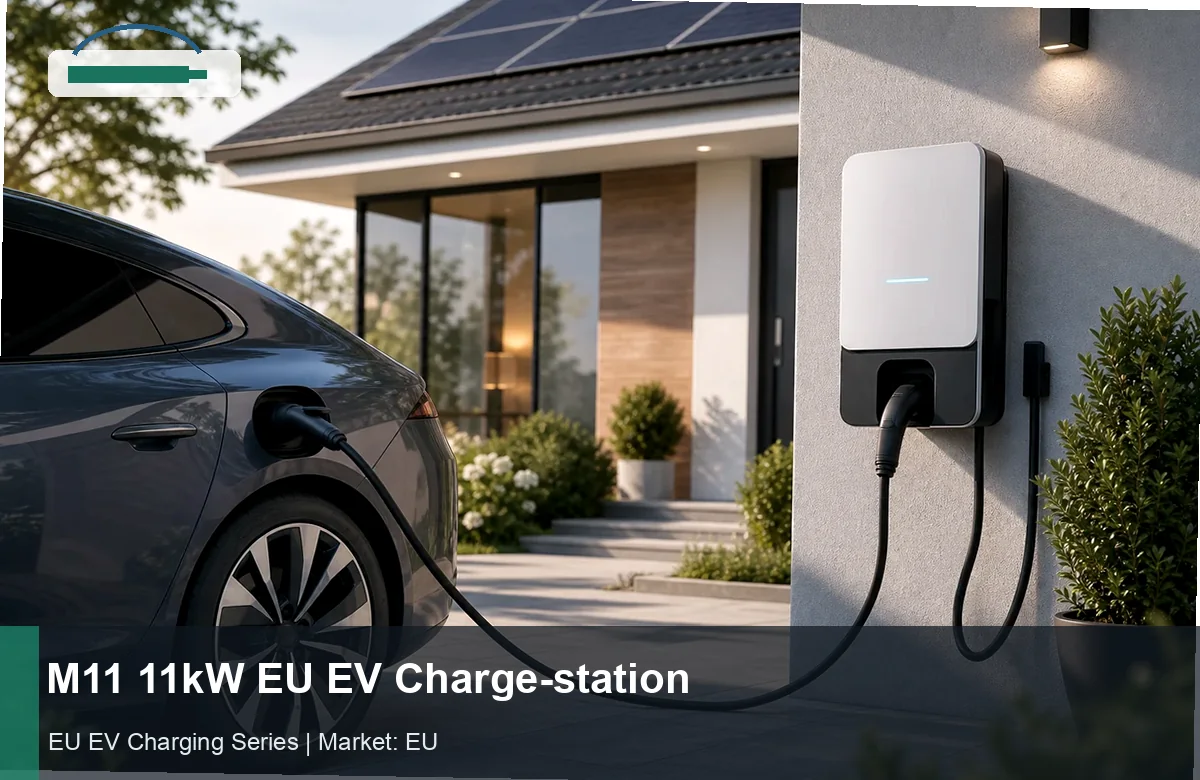
| 11kW | EU three-phase home and light commercial channel | Confirm grid phase, connector, app, and certification. |
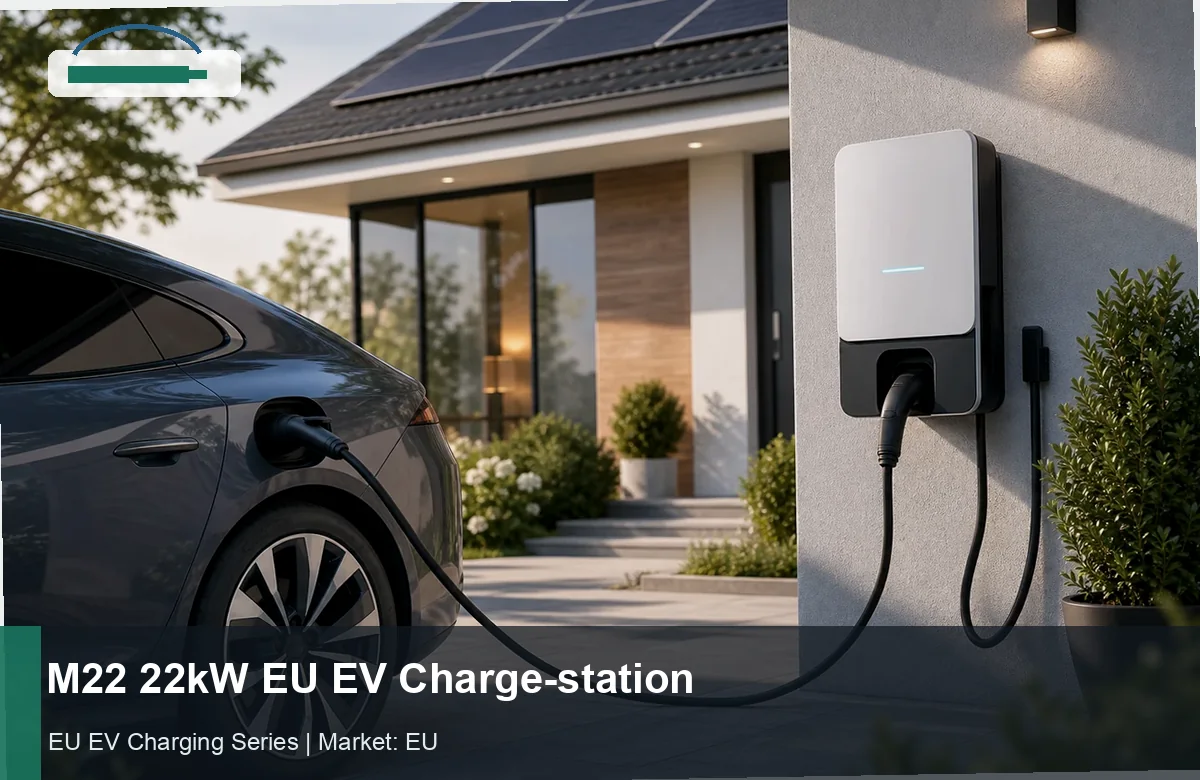
| 22kW | Distributor flagship SKU and stronger commercial positioning | Confirm installation environment, cable, enclosure, and target market documents. |
Products
EV Chargers / EU EV Charging Series
Wall-mounted and portable EV chargers for EU residential and light commercial channels.
EV Chargers / EU EV Charging Series
Wall-mounted and portable EV chargers for EU residential and light commercial channels.
EV Chargers / EU EV Charging Series
Wall-mounted and portable EV chargers for EU residential and light commercial channels.
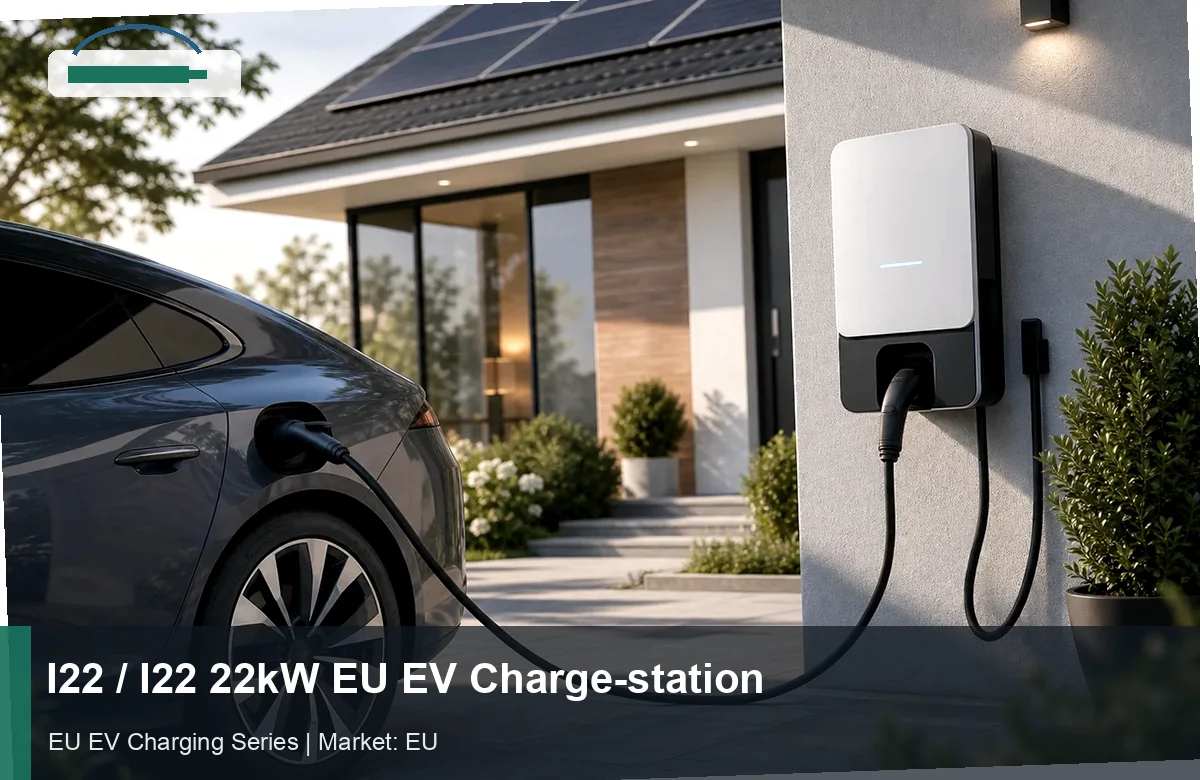
EV Chargers / EU EV Charging Series
Wall-mounted and portable EV chargers for EU residential and light commercial channels.
Not by changing firmware or settings. Moving to a higher power band requires replacing the wallbox and, more importantly, confirming that the site grid supply supports the higher power. A single-phase connection cannot run an 11kW or 22kW wallbox without a grid upgrade. Confirm the grid supply type before advising a customer.
7kW is the most common for standard homes with single-phase connections. 11kW is the preferred upgrade where three-phase residential supply is available, which is more common in some markets than others. Confirm the typical supply type for your market before planning assortment ratios.
Yes, CE is referenced across the EU EV charger range. For the specific documents required for your destination market, grid program, or incentive scheme, confirm with sales so the correct documents ship with the order.
Connector type is market-specific and is confirmed with sales for your destination and vehicle base. Do not assume a default connector; the right choice depends on the dominant standard in your market and any local requirements.
Yes. Spire ESS supplies batteries, hybrid inverters, mono panels, and EV chargers from one catalog. For a solar-plus-storage-plus-charging bundle, include the full mix in a single inquiry and sales returns a matched quote covering all components and the combined shipment.
Both are wall-mounted CE EU wallboxes at the same rating (for example M7 and I7 are both 7kW). Differences in connector, cable, smart features, and enclosure are confirmed with sales for your market and channel.
AI product assistant